Length-to-width
Compares visible face length with cheek-level width.
Upload a photo and get all seven face shapes ranked as a distribution, not one label. The detector measures three width ratios plus the jaw corner and chin taper angles, because width alone cannot tell a square face from a round one — and your image never leaves the browser.
Analyze a photo →Upload a front-facing photo — the contour model runs entirely in your browser and keeps your image on your device.
Front-facing, neutral expression, even light. JPG, PNG, WebP, HEIC or HEIF up to 10 MB.
or drag and drop it here
A typical first run loads about 15 MB of model/runtime files, then the browser caches them. Nothing is submitted to our analysis API.
The first run can take a moment. Your photo remains on this device.
Your photo and landmarks stay in page memory and are cleared when you reset or leave. Face-shape tools keep a small result summary in this tab for up to 30 minutes so you can continue to hairstyles or glasses. Clear the result to remove it.
Keep one face in view and look straight ahead while the scanner collects usable frames. It measures five contour features across several seconds. This camera mode is a beta; multi-frame analysis has not been validated as more accurate than a photo.
Include your forehead, cheeks and chin. Use even front lighting and keep hair away from the outline.
Camera frames stay in this browser. The camera stops when the scan ends, you cancel, switch modes or leave this tab.
Confirm the statement above to start. The first run also needs to download the local model.
0 usable frames
If the camera cannot start, use a photo or enter manual measurements.
Take four measurements with a tape or ruler and answer two questions about your jaw and chin. This runs the same seven-profile classifier as the photo tool, without loading the face model.
Use any unit you like — centimetres, inches, anything — as long as all four use the same one. Only the ratios between them are used.
Across the widest point of your forehead, roughly halfway between your brows and hairline.
Across the top of your cheekbones, from the outer corner of one eye to the other.
From below one ear to below the other, at the corner where the jaw turns toward the chin.
From the centre of your hairline straight down to the bottom of your chin.
Enter all four measurements to continue.
All seven profiles are scored, so you can see how close the runner-up is.
Hand measurements are less repeatable than landmark detection, especially at the forehead and jaw. Treat this as a cross-check on the photo result rather than a replacement for it.
An oval and oblong face can taper similarly; face length helps separate them. Round and square contours can have similar widths; the jaw corner becomes more useful. The result ranks all seven profiles so you can compare the leading matches.
By AI Rate Face · Updated September 8, 2026 · Sources & reference choices
Each guide covers how to identify the shape, the reference measurements behind it, and hairstyle, glasses, beard, contour and accessory starting points.

Moderately long, with the forehead a little wider than the jaw and a softly rounded chin.
Read guide →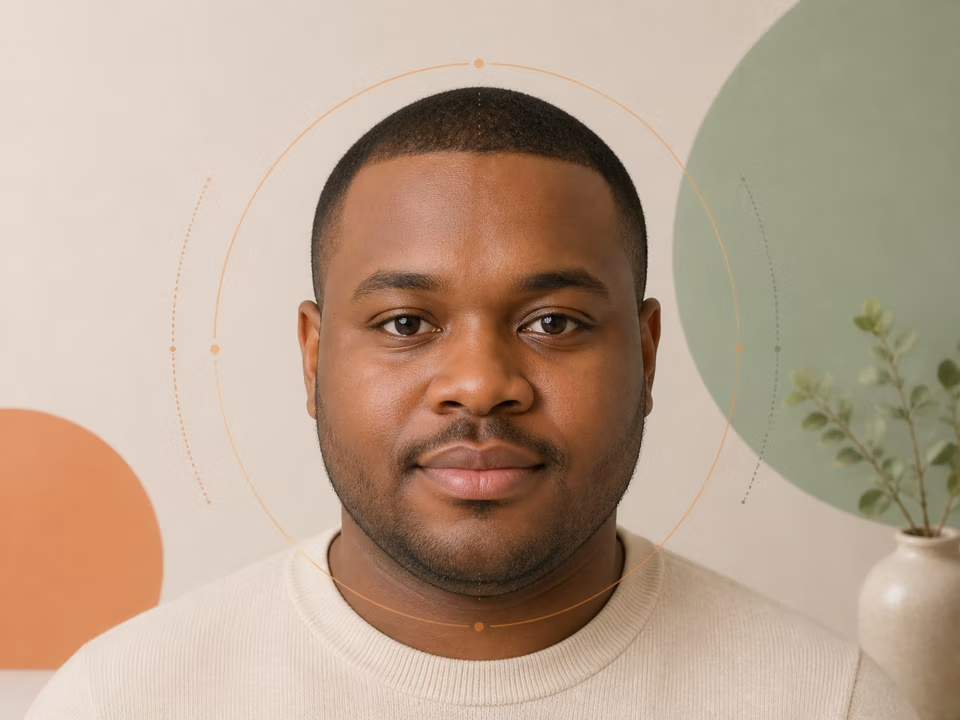
Similar in length and width, with a soft jaw that curves instead of turning a corner.
Read guide →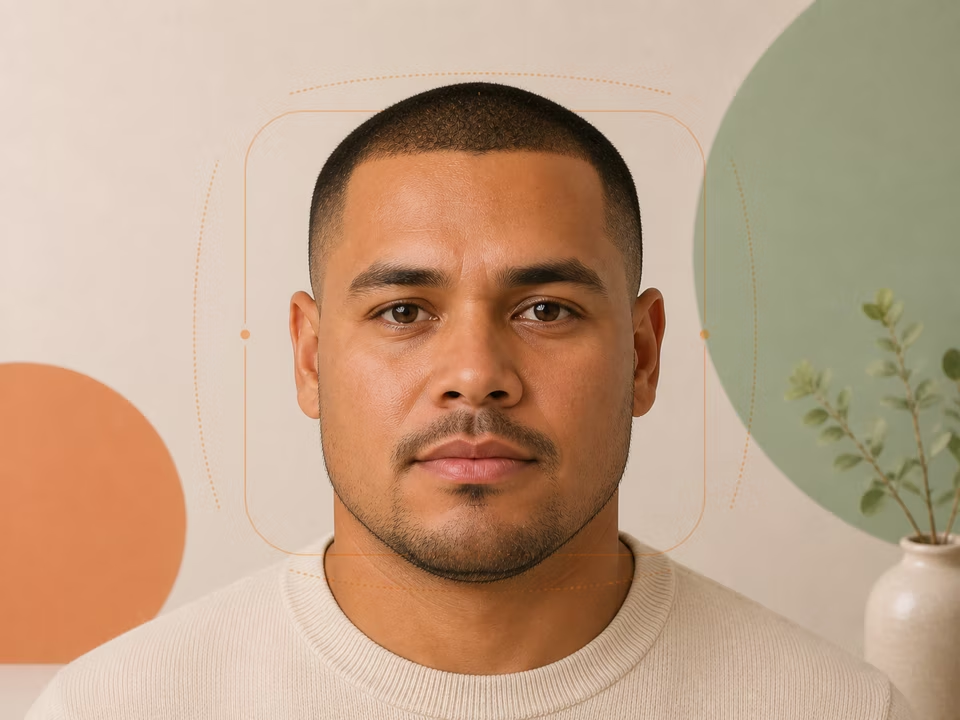
Short and wide like a round face, but with a jaw that turns a clear corner below the ear.
Read guide →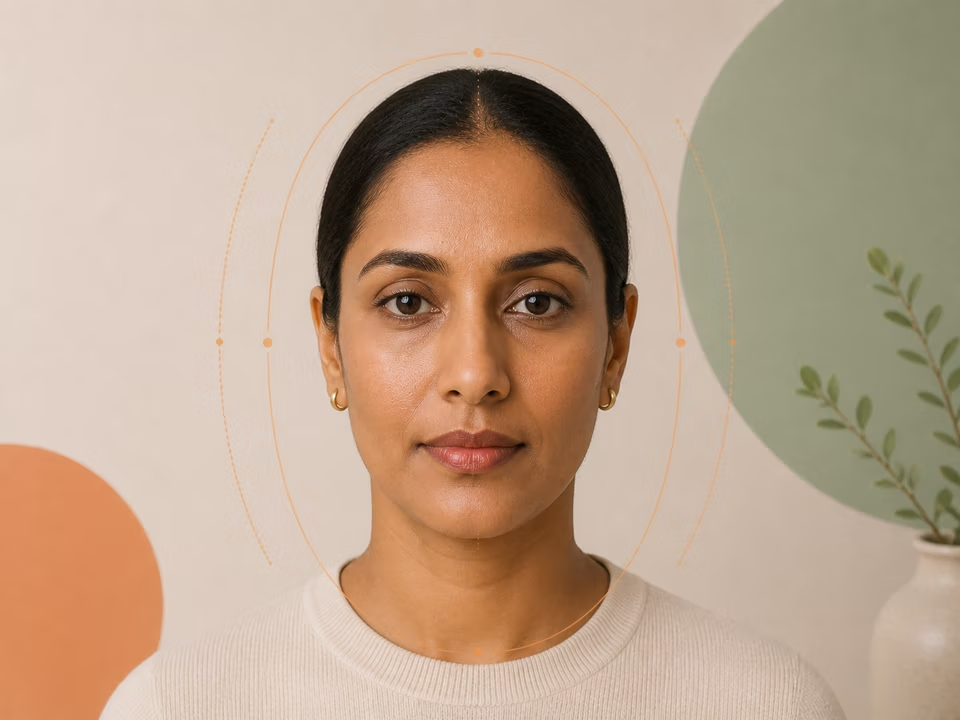
The longest of the seven profiles, with widths that stay fairly even from forehead to jaw.
Read guide →
A wide forehead narrowing to a pointed chin, often with a widow's peak.
Read guide →
Widest at the cheekbones, with both a narrow forehead and a narrow, pointed chin.
Read guide →
A jaw wider than the forehead — the inverse of the heart profile.
Read guide →The output is built from inspectable photo geometry and a separate image-quality signal.
Compares visible face length with cheek-level width.
Measures forehead, cheek and jaw widths relative to the cheek contour.
Adds the jaw corner angle and the chin taper angle, which separate square from round and pointed from broad.
Ranks all seven reference profiles with normalized similarity shares instead of forcing a single label.
Visible face-oval and key width landmarks define the photo contour.
Three scale-independent width ratios and two contour angles are taken from the landmark set.
Each of the seven profiles is scored on all five measurements and converted into a match percentage.
Hair, facial hair, pose and camera perspective can obscure the true contour.
Most people sit between shape categories; the confidence score reflects separation between matches.
The labels are styling shorthand, not biological or medical classifications.
Yes. Face shape is continuous, which is why this detector ranks all seven profiles with a percentage each. When the top two are within about ten points, both are reasonable descriptions of the same face.
Not by width. Both are relatively short and wide, so the difference is the jaw corner: a square contour turns sharply toward the chin, a round one curves. This detector measures that angle directly rather than inferring it from width ratios.
If possible. A clear forehead, cheek and jaw outline gives the detector better visible evidence, and the forehead width is the measurement hair affects most.
Detection runs locally. A summary of the seven shape weights and five measurements stays in this tab for up to 30 minutes so hairstyle and glasses pages can reuse it. The summary does not include your photo or landmarks. You can clear it from the result.

Find specific haircuts for your face shape. Reuse your local result, filter by length, texture and maintenance, and copy a note for your stylist.
Open tool →
Free glasses finder: upload a photo for frame-shape starting points from local face-contour ratios, with fit, comfort and prescription needs kept first.
Open tool →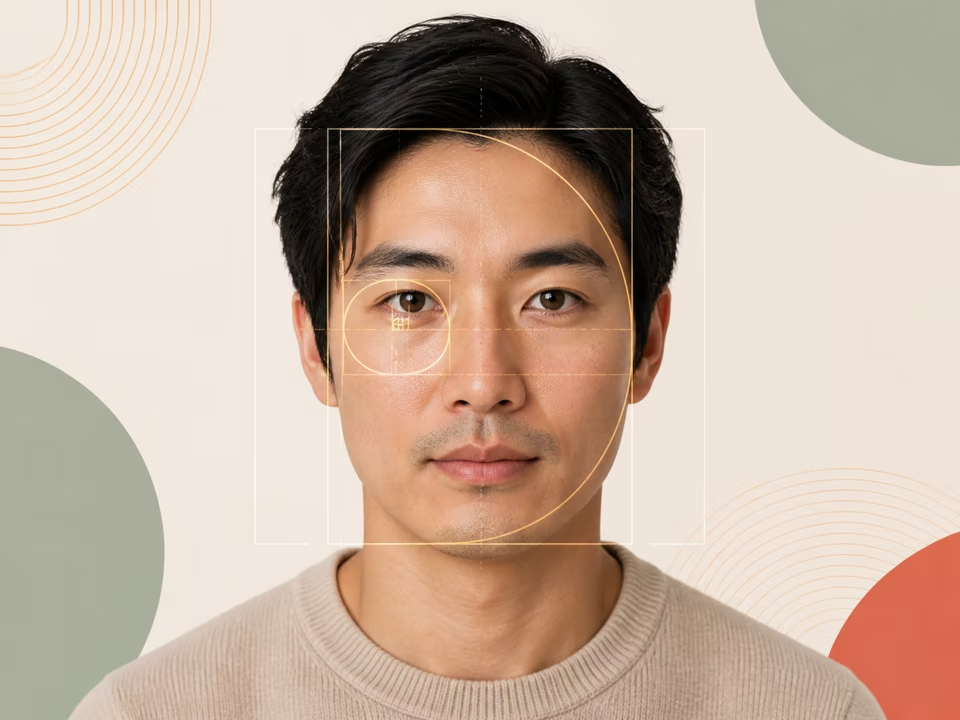
Free golden ratio face calculator: upload a photo to get your golden ratio face score, with every measured ratio, its phi reference and the difference shown.
Open tool →