Split by cause
Lighting, sharpness, head angle, framing and tonal contrast are scored separately for each photo, so you can see exactly where the difference comes from.
Stop guessing between two shots. Upload both and get a row-by-row breakdown of lighting, sharpness, head angle, framing and symmetry — plus a stated answer about which one is the stronger photo, and why.
Compare two photos locally →Both images are measured with identical formulas in this browser. Neither photo is uploaded.
or drop it here
or drop it here
Each photo is measured with the same deterministic formulas, so identical inputs always return identical numbers. A typical first run loads about 15 MB of model files, then the browser caches them.
Local mode: your images and detected landmarks are held in page memory only and are cleared when you reset or leave.
The comparison never answers “which face is better”. It answers which photograph presents a face more clearly, and names the factors responsible.
Lighting, sharpness, head angle, framing and tonal contrast are scored separately for each photo, so you can see exactly where the difference comes from.
Face geometry and visible symmetry are shown in their own marked rows. If they barely move between photos, the difference is photography, not your face.
One photo is named as the stronger option, with the margin in points and the two or three factors that produced it.
Each photo goes through the same local landmark pass and the same deterministic formulas.
Every measurement is placed side by side, with the leading value highlighted per row.
The factors where the winning photo leads by more than three points are listed as the reasons.
This compares photographs, not people. It cannot tell you which photo someone else will prefer.
It has no idea about expression, styling, background, outfit or context — all of which matter enormously in a real profile photo.
Two photos taken with very different lenses or crops are not strictly comparable, because perspective changes the measured geometry itself.
A stronger photo-presentation score does not guarantee more matches, replies or interviews.
This tool names the photo that presents a face more clearly — better lighting, sharper focus, a more front-facing angle and cleaner framing. That is a real advantage, but pick between close results using judgment about expression, setting and what the photo says about you.
The comparison scores measurable photographic conditions, not charm. If a photo you prefer scores lower, check the breakdown: it usually loses on sharpness or head angle, both of which are easy to fix in a retake of the same idea.
Roughly, yes. If face geometry stays within a few points, the tool is measuring the same face under different conditions and the comparison is clean. A large geometry gap usually means a big change in expression, camera distance or crop.
No. Both images are decoded, measured and compared inside this browser tab. Nothing is sent to our servers and nothing is stored after you reset or close the page.
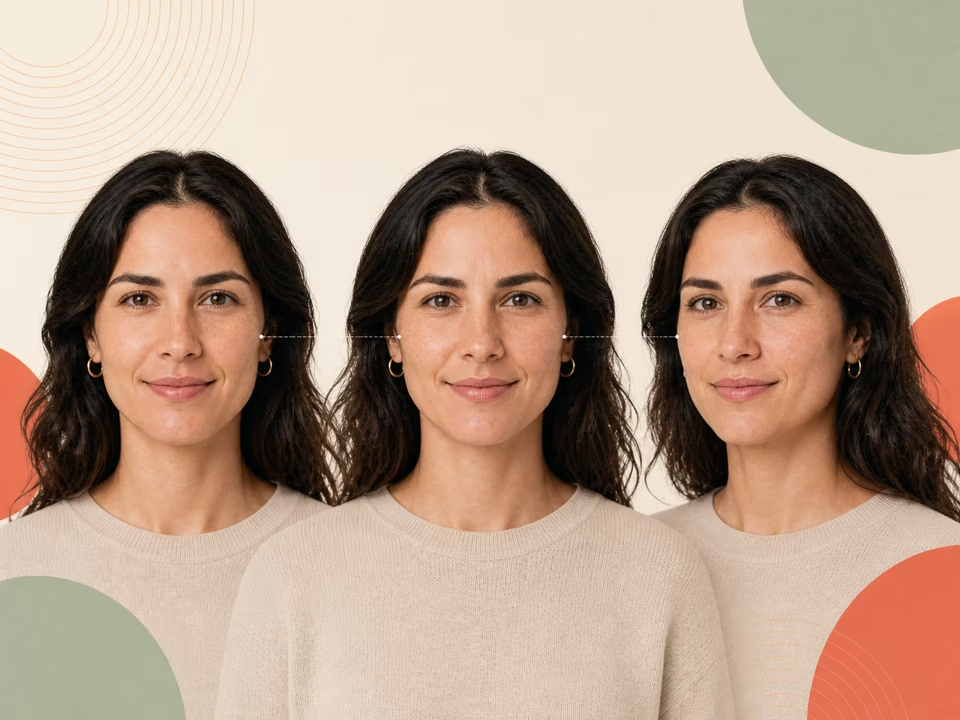
Run two or three photos of the same face to see how much of a score change is the face and how much is the photography.
Open tool →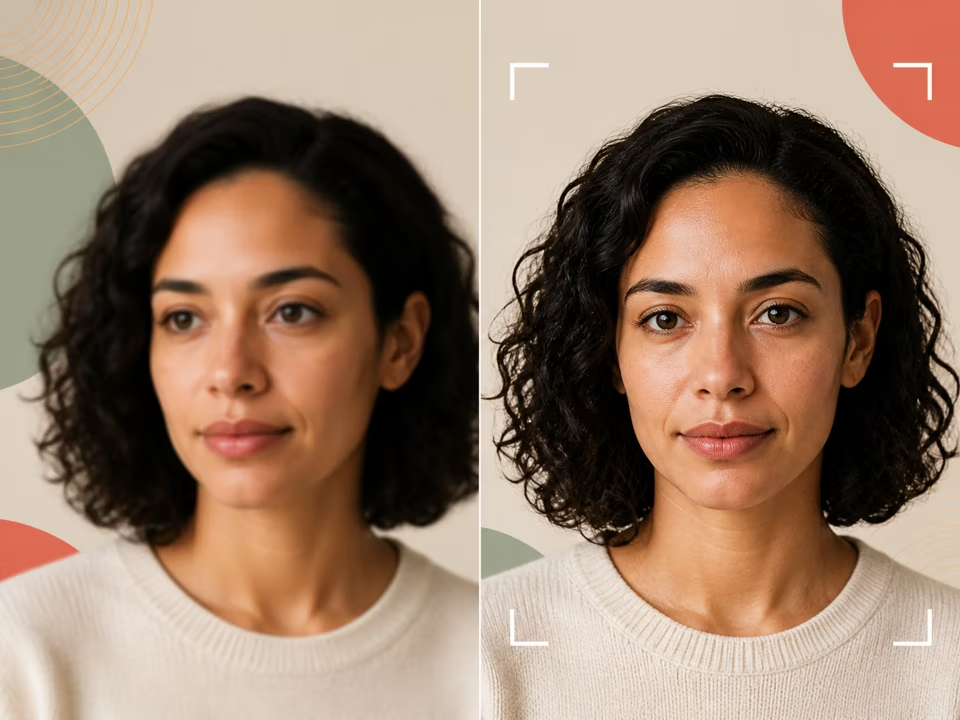
Free photo quality checker: upload a photo to check brightness, contrast, sharpness, face coverage and pose before you use it for face analysis.
Open tool →
Free facial harmony test: upload a photo for a 0–100 harmony score from six weighted relationships, plus what helps it, what lowers it and what is only the photo.
Open tool →