Face geometry per photo
The part of the score that describes your face — symmetry, proportion and feature relationships — measured independently for each photo you upload.
Get 6/10 in one photo and 8/10 in the next? Upload two or three shots of the same face. This test measures each one separately and tells you how much of the difference was your facial geometry and how much was lighting, focus and camera angle.
Run the consistency test →Two or three photos of the same adult face, measured with identical deterministic formulas in this browser.
or drop it here
or drop it here
or drop it here
Each photo is measured with the same deterministic formulas, so identical inputs always return identical numbers. A typical first run loads about 15 MB of model files, then the browser caches them.
Local mode: your images and detected landmarks are held in page memory only and are cleared when you reset or leave.
Most face-rating tools collapse the face and the photograph into one number. Keeping them in separate columns is the entire point of this test.
The part of the score that describes your face — symmetry, proportion and feature relationships — measured independently for each photo you upload.
The part that describes the photograph — lighting, sharpness, head angle, framing and contrast — kept in a separate column so the two never blur together.
Both columns report a spread. A narrow face-geometry range next to a wide presentation range is the clearest possible answer to why a score moved.
Use photos of the same face taken under whatever conditions you normally shoot in.
Every photo goes through the same deterministic formulas — the same image always returns the same numbers.
The face column and the photo column are compared, and the factors that varied most are ranked.
Face geometry is measured from a 2D photo, so it is not perfectly pose-independent. A large angle change moves it too, and the tool says so when it does.
Expression is a genuine change to the measured geometry, not a photographic artefact — a broad smile will legitimately shift the numbers.
Three photos is a small sample. It shows whether variation exists, not a statistically robust estimate of it.
A stable geometry score is not a statement that your face is symmetrical, attractive or unchanging — only that this measurement repeated.
Because most face-rating tools mix two different things into one number: the geometry of your face and the quality of the photograph. Lighting, focus, head angle and camera distance can move a combined score by 15 points or more while the face itself is unchanged. This test separates the two so you can see which one actually moved.
The calculation should be. Our formulas are deterministic: feeding the same processed image in twice returns identical numbers, with no randomness. What changes between your photos is the input, not the model. Tools that return wildly different results for the same image are doing something else.
A face-geometry range of three points or less across your photos is treated as stable here. Up to seven is within what pose and expression alone typically produce. More than that usually means a large change in angle, expression or camera distance between the shots.
Two is enough to see whether variation exists. Three gives a better sense of the range, especially if you deliberately vary one thing at a time — same pose in different light, or same light at different angles.
No. Every image is decoded and measured inside this browser tab. Nothing is transmitted, and everything is discarded when you reset or leave the page.
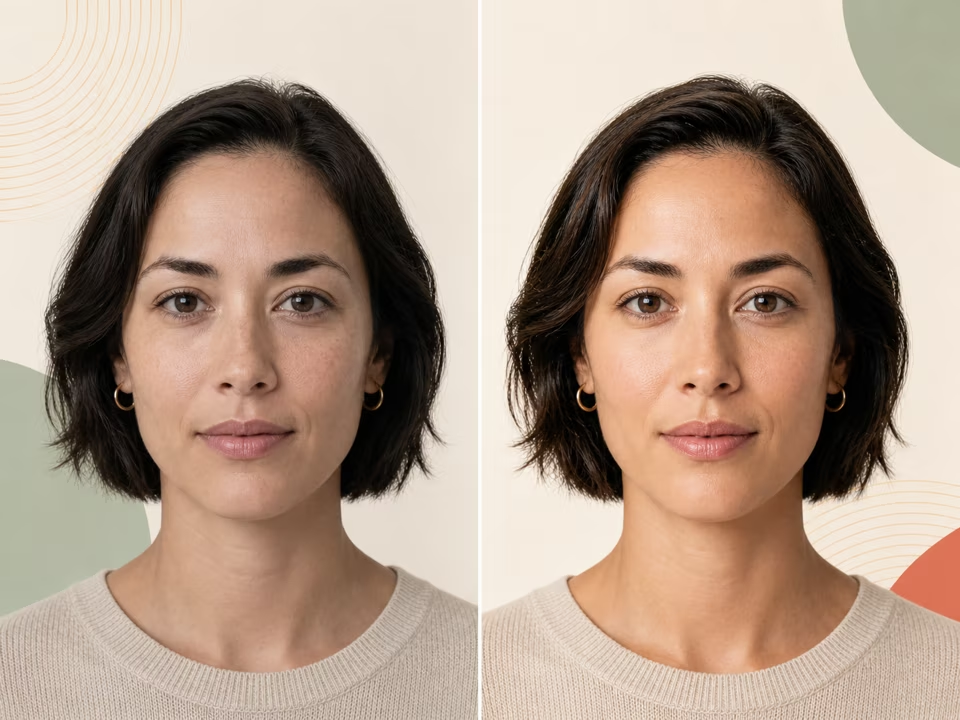
Upload two photos and see which one presents better, broken down by lighting, sharpness, head angle and framing.
Open tool →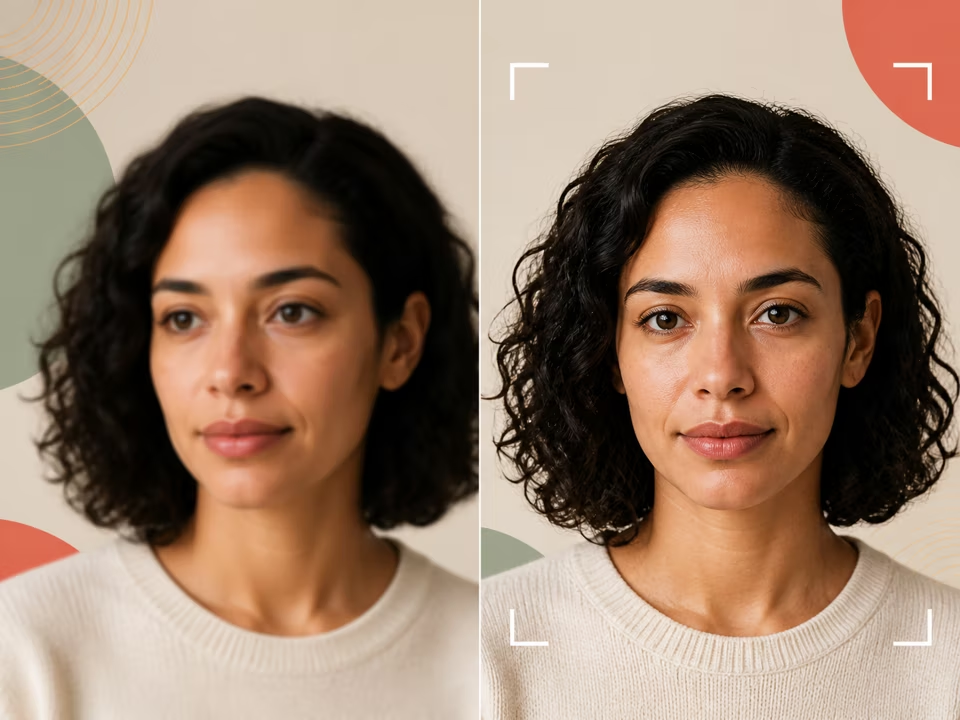
Free photo quality checker: upload a photo to check brightness, contrast, sharpness, face coverage and pose before you use it for face analysis.
Open tool →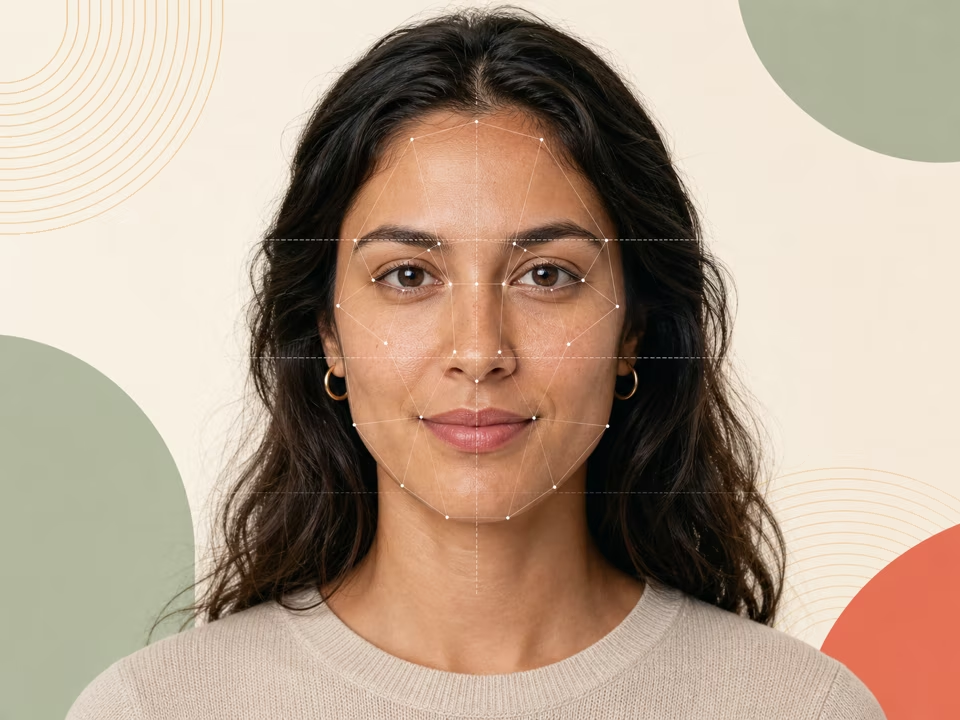
A free on-device face score, face-shape match, symmetry breakdown and practical photo and styling plan.
Open tool →