Stated definition
Vertical distance from the interpupillary line to the top of the upper lip, divided by the distance between the pupils.
Midface ratio is quoted constantly and defined inconsistently. Upload a photo to get yours with the definition this page uses stated up front, both underlying distances in pixels, and a long, short or balanced reading.
Analyze a photo →Upload a front-facing photo — both distances are measured from local landmarks in this browser and shown alongside the ratio.
Front-facing, neutral expression, even light. JPG, PNG, WebP, HEIC or HEIF up to 10 MB.
or drag and drop it here
A typical first run loads about 15 MB of model/runtime files, then the browser caches them. Nothing is submitted to our analysis API.
The first run can take a moment. Your photo remains on this device.
Your photo and landmarks stay in page memory and are cleared when you reset or leave. Face-shape tools keep a small result summary in this tab for up to 30 minutes so you can continue to hairstyles or glasses. Clear the result to remove it.
The output is built from inspectable photo geometry and a separate image-quality signal.
Vertical distance from the interpupillary line to the top of the upper lip, divided by the distance between the pupils.
The numerator and denominator are printed in pixels so the ratio can be checked rather than trusted.
The midface is also expressed as a share of total visible face length.
Eye centres and the upper-lip landmark are detected locally.
Distances are taken in an eye-line-aligned frame so small head roll does not inflate the height.
The height is divided by the interpupillary distance to give a scale-independent ratio.
Published midface definitions differ; a value from another calculator will not necessarily match this one.
Camera distance and lens focal length compress or stretch vertical facial distances.
A compact or elongated reading is a description of proportion, not a defect or a target for treatment.
Sources that quote a reference usually place it near 1.00, meaning the eye-line-to-lip height is close to the distance between the pupils. This page treats roughly 0.95–1.05 as balanced and describes anything outside it directionally rather than as a fault.
Because the landmarks differ. Some tools measure to the nose base, some to the mouth centre, and some use bizygomatic width instead of interpupillary distance. This page states its own definition on the result.
Yes, considerably. A close phone selfie enlarges the nose and midface region relative to the pupils. Step back and zoom in for a more stable measurement.

Free facial harmony test: upload a photo for a 0–100 harmony score from six weighted relationships, plus what helps it, what lowers it and what is only the photo.
Open tool →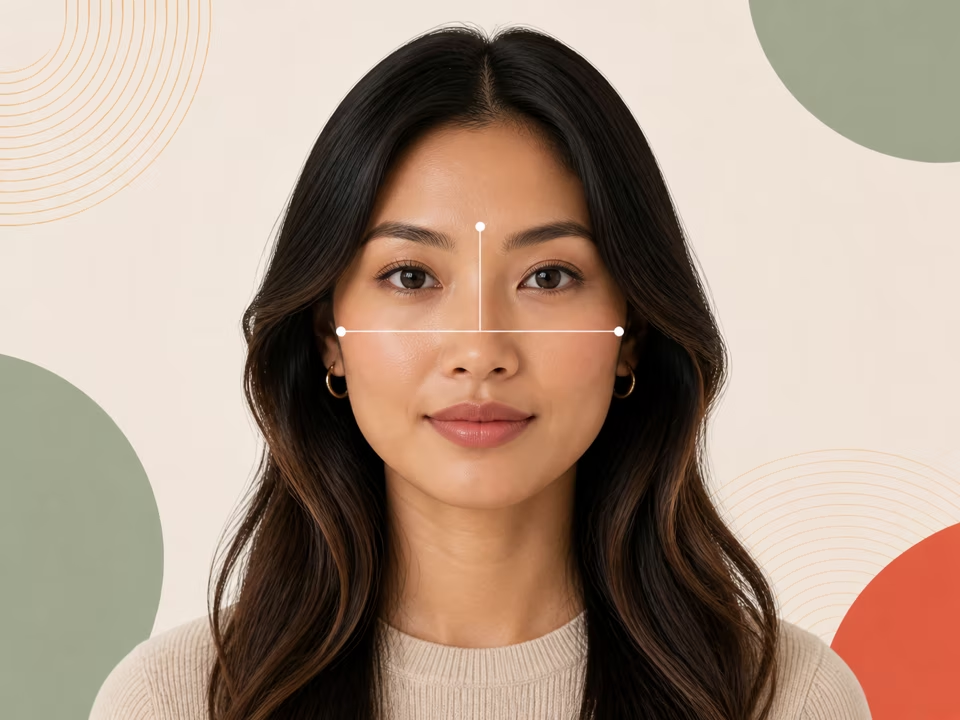
Free facial width-to-height ratio calculator: upload a photo to get your fWHR from bizygomatic width and upper-face height, with both measurements shown.
Open tool →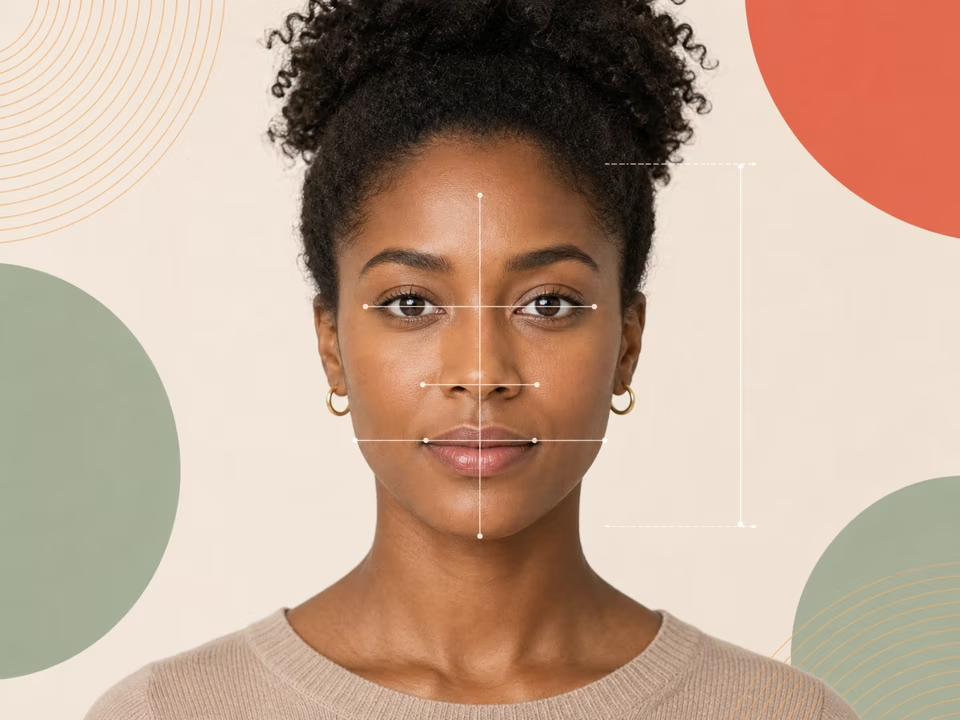
Free face ratio calculator: upload a photo to measure your facial proportions — thirds, fifths-related eye spacing and feature widths — with an annotated image.
Open tool →