
Five segments
Outer contour to outer eye corner, each eye, the gap between the eyes, then the far eye and outer contour, taken along the eye-line axis.
The rule of fifths divides face width into five vertical segments of about one eye width each — the horizontal counterpart to the facial thirds. Upload a photo to measure yours, get each segment as a percentage, and see exactly how far each sits from 20%.
Analyze a photo →Upload a front-facing photo — the five segments are measured from local landmarks in this browser and never uploaded.
Front-facing, neutral expression, even light. JPG, PNG, WebP, HEIC or HEIF up to 10 MB.
or drag and drop it here
A typical first run loads about 15 MB of model/runtime files, then the browser caches them. Nothing is submitted to our analysis API.
The first run can take a moment. Your photo remains on this device.
Your photo and landmarks stay in page memory and are cleared when you reset or leave. Face-shape tools keep a small result summary in this tab for up to 30 minutes so you can continue to hairstyles or glasses. Clear the result to remove it.
The output is built from inspectable photo geometry and a separate image-quality signal.
Outer contour to outer eye corner, each eye, the gap between the eyes, then the far eye and outer contour, taken along the eye-line axis.
Each segment is shown as a percentage of measured face width, against the 20% equal-fifths reference.
The central fifth is also reported as the classical eye-gap-to-eye-width ratio, where the reference is one eye width.
Six landmarks define the five vertical boundaries: the two outer contour points and the four eye corners.
Boundaries are read on the eye-line-aligned axis, so head roll does not stretch one side.
Each segment is expressed as a percentage of total width and compared with 20%.
Width is measured across the visible face contour, not ear to ear, so the two outer fifths read narrower than a tape measure would report.
Any head turn makes the near side of the face wider than the far side; the outer-fifth difference is the first place that shows up.
Equal fifths is a drawing convention from classical proportion studies. Most measured faces do not match it, and that is not a fault.
Left and right describe the photo as you see it, not the sitter's own left and right.
A classical drawing convention that divides face width into five equal vertical parts, each about one eye wide: the outer margin, the eye, the gap between the eyes, the other eye and the other margin.
The same convention described from the eye out: the face is roughly five eye widths across, and the gap between the eyes is roughly one eye width. This page reports both the segment percentages and that eye-gap ratio.
Because this tool measures the visible face contour rather than ear to ear. The outer segments are systematically narrower than the convention assumes, so read them against each other rather than against 20% alone.
Thirds divide the face vertically into upper, middle and lower sections. Fifths divide it horizontally. They describe different axes of the same face, which is why the two pages report different numbers.
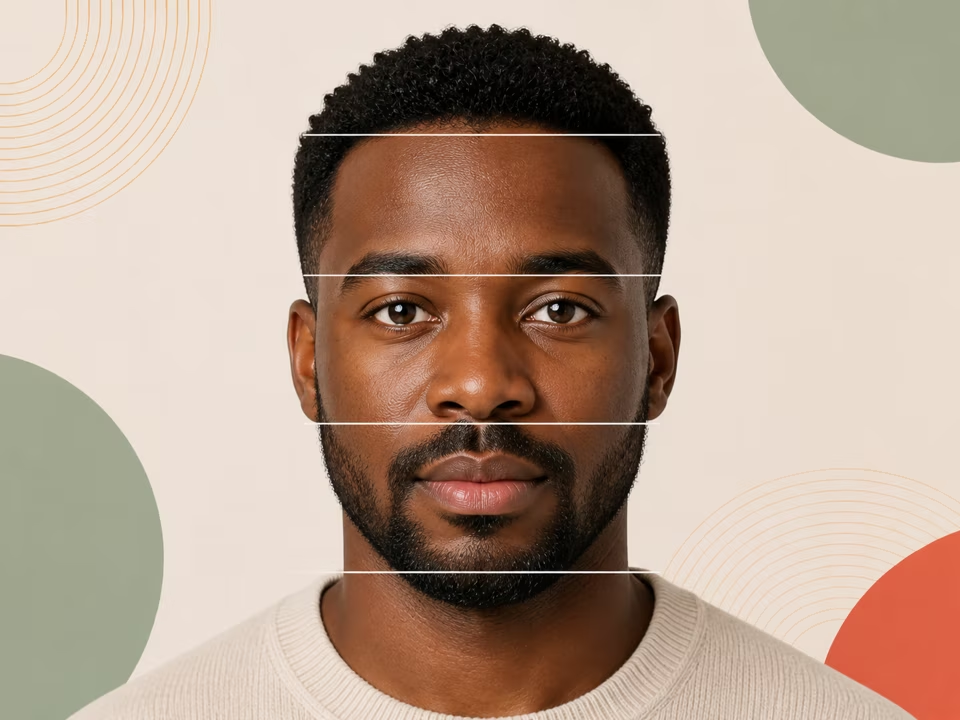
Free facial thirds calculator: upload a photo to measure your upper, middle and lower thirds as percentages and see how far each sits from the 33/33/33 reference.
Open tool →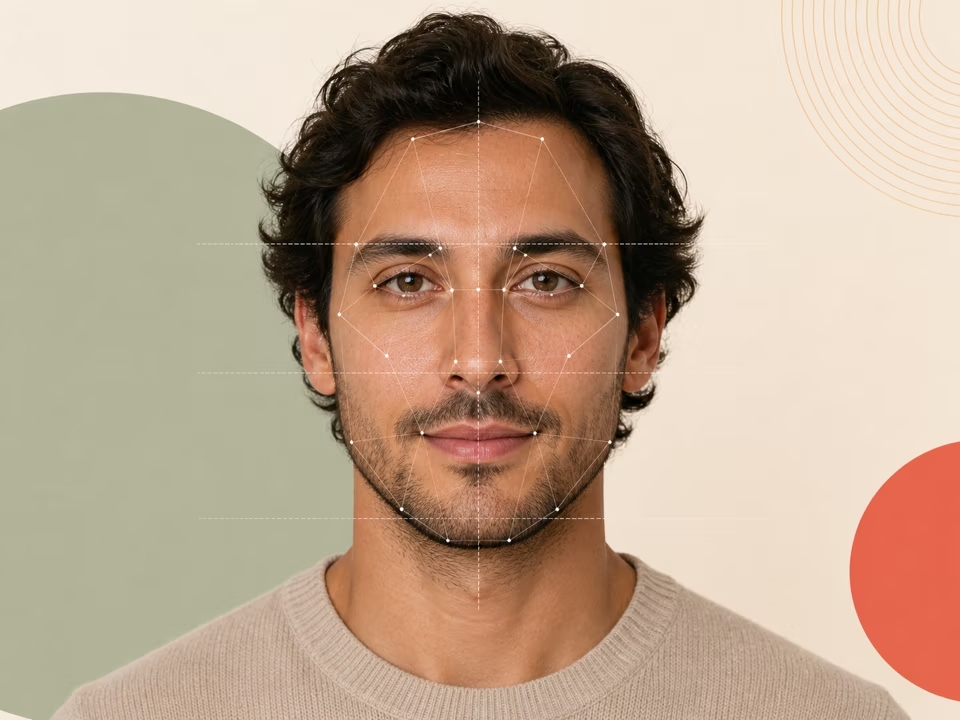
Free face symmetry test: upload a photo and check how symmetrical your face is region by region, with pose correction and an annotated overlay.
Open tool →
Free canthal tilt calculator: upload a photo to measure the visible angle between your inner and outer eye corners, with pose and photo-quality context.
Open tool →