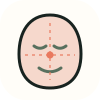
Width / opening
Compares horizontal eye width with average vertical lid opening in the photo.
Upload a photo to get a conservative eye-geometry label plus width-to-opening ratios, tilt and symmetry. Analysis stays on your device, and the tool avoids claims it cannot reliably infer from landmarks alone.
Analyze a photo →Upload a photo looking straight at the camera, with a relaxed expression and unobstructed eyes — analysis stays on your device.
Front-facing, neutral expression, even light. JPG, PNG, WebP, HEIC or HEIF up to 10 MB.
or drag and drop it here
A typical first run loads about 15 MB of model/runtime files, then the browser caches them. Nothing is submitted to our analysis API.
The first run can take a moment. Your photo remains on this device.
Your photo and landmarks stay in page memory and are cleared when you reset or leave. Face-shape tools keep a small result summary in this tab for up to 30 minutes so you can continue to hairstyles or glasses. Clear the result to remove it.
The detector uses visible eye width and opening for a photo-based shape description. Corner tilt is a separate measurement. A smile, squint or head angle can change the outline, so the result describes this expression and viewpoint.
By AI Rate Face · Updated September 8, 2026 · Sources & reference choices
The output is built from inspectable photo geometry and a separate image-quality signal.
Compares horizontal eye width with average vertical lid opening in the photo.
Measures the visible outer-to-inner corner angle for each eye.
Combines visible size, opening and angle differences.
Six landmarks around each visible eye define its simplified geometry.
Width-to-opening ratios produce a conservative shape-family label.
Pose and photo-quality signals accompany the result.
The tool cannot reliably classify monolid, hooding or deep-set anatomy from sparse 2D landmarks.
Squinting, smiling, makeup, glasses and eyelashes can change the visible opening.
The labels describe geometry in one photo and are not ethnic or biological classifications.
The landmark model supports conservative width-and-opening geometry. More specific labels would require visual tissue interpretation that this tool does not claim.
Yes if comfortable. Clear, unobstructed eye corners and lids improve the estimate.
It can. A smile may narrow the visible lid opening, so a relaxed expression is best for repeatability.
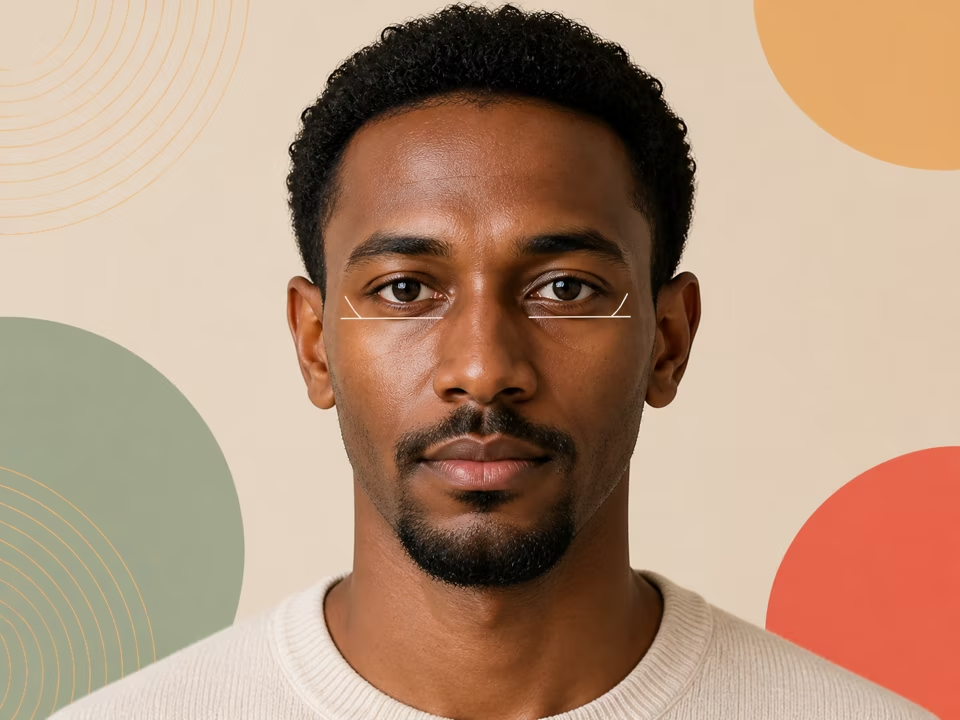
Free canthal tilt calculator: upload a photo to measure the visible angle between your inner and outer eye corners, with pose and photo-quality context.
Open tool →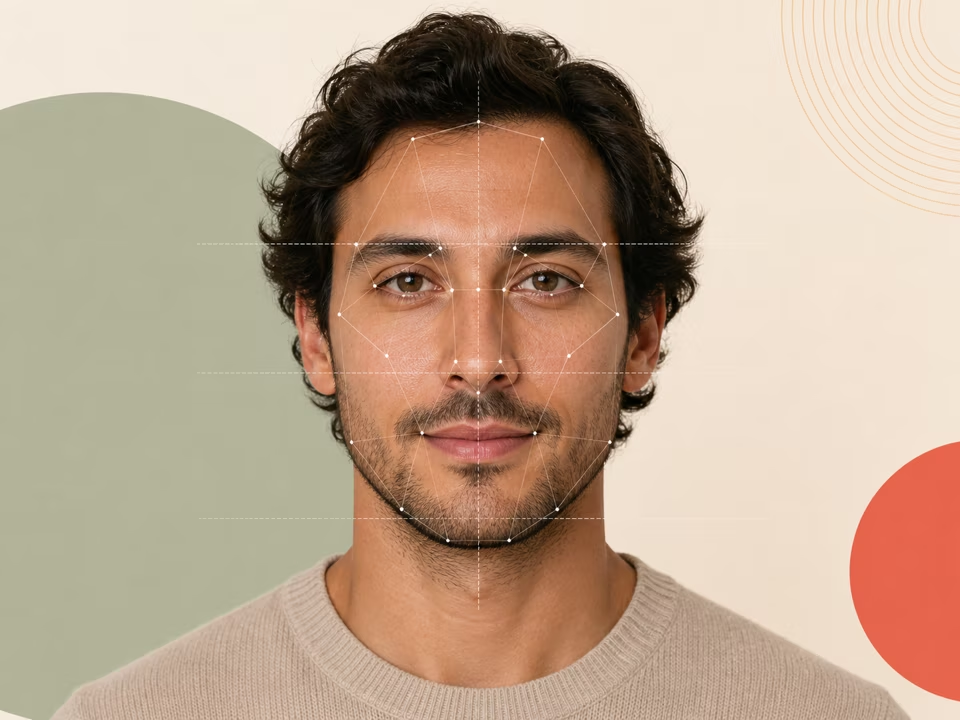
Free face symmetry test: upload a photo and check how symmetrical your face is region by region, with pose correction and an annotated overlay.
Open tool →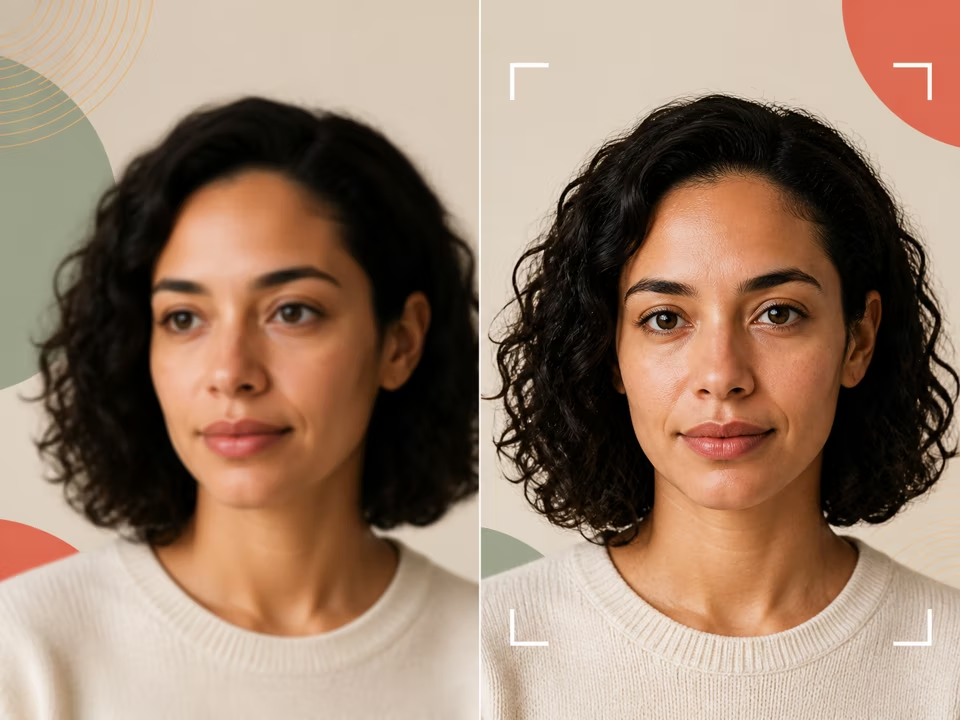
Free photo quality checker: upload a photo to check brightness, contrast, sharpness, face coverage and pose before you use it for face analysis.
Open tool →