Choose the perimeter before the part
Start by showing your stylist where you want the ends to land when the hair is dry. A full edge near the chin adds a visible horizontal line around the lower face. Taking that edge below the chin moves the line downward. Neither length is universally better; choose the effect you want.
Try your usual part while discussing the cut. A different part may look good in a reference photo but require more styling if it works against a cowlick. Keep the hair behind and in front of your ears during the consultation so you can see how both versions sit.
Match the weight to your hair
Fine hair may lose the full perimeter if too much weight is removed. Dense hair may need internal shaping to keep the lower section from becoming a solid block. These are different cutting decisions even when both clients ask for an Italian bob.
With waves or curls, choose the outline using the dry shape as well as the stretched length. Ask what the cut will look like when you air-dry it, rather than assuming the rounded finish in a photograph happens without styling.
Decide how much styling you want to do
A full bob can work with natural movement, but a polished curved-under finish may need a brush and dryer. If you prefer air-drying, bring a photo of your normal texture to the appointment and ask for a version that works in that state.
Before cutting, check whether you need to tie your hair back and how often you want to trim the outline. A collarbone lob may serve that routine better, although it creates a different silhouette from a jaw-length Italian bob.
Questions about italian bob
Can a round face wear an Italian bob?
Yes. If you want less visible cheek width, compare a slightly longer front and a perimeter below the chin. A shorter, fuller version is also a valid choice if you like that shape.
Is an Italian bob always chin-length?
The name is used for several full bob variations. Agree on the actual dry length and weight with your stylist instead of relying on the name alone.
Will this tool show the haircut on my face?
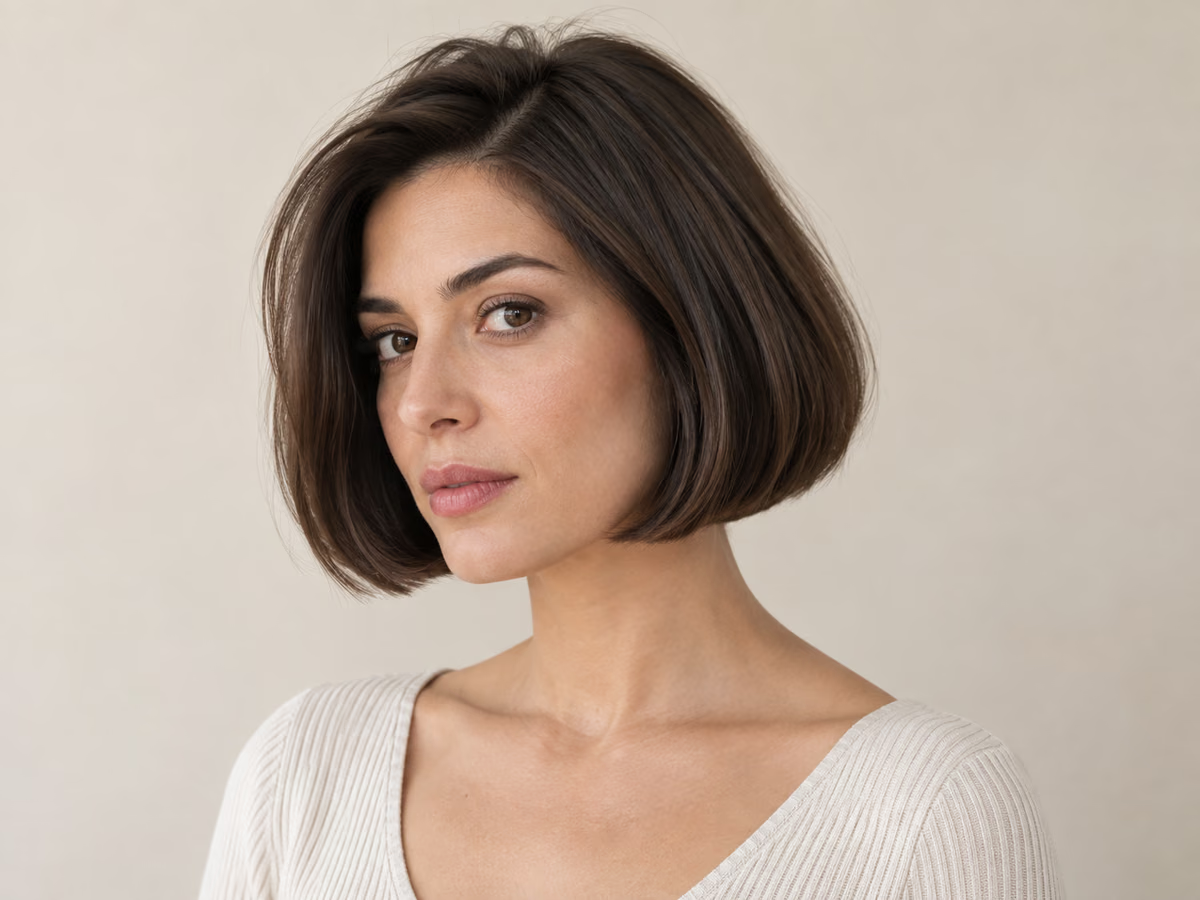
No. It compares your face-shape result with our styling rules and suggests a variation. The reference portrait is an AI-generated illustration, not a preview of your haircut.
How these suggestions were written
We match the seven broad contour profiles to adjustable haircut features. The rule weights are authored suggestions; they have not been fitted to client outcomes. Your stylist can account for hair density, growth patterns and the finish you want.
British Vogue: the Italian bob: Reference for the full-ended bob description. The seven-shape variations here are our editorial suggestions, not a finding from that article.
See the editorial policy and face-measurement methodology.