Four profile angles
Gonial angle at the jaw, nasofrontal at the bridge, nasolabial at the nose base, and overall facial convexity.
Front-facing tools cannot see the profile outline. Upload a photo turned 80–90° from the camera and get the four profile angles plus lip projection, each shown against this tool’s selected guide range.
Analyze a photo →Upload a photo turned about 80–90° from the camera — the profile outline is measured in this browser and never sent anywhere.
Turned 80–90° from the camera, neutral expression, clean background. JPG, PNG, WebP, HEIC or HEIF up to 10 MB.
or drag and drop it here
A typical first run loads about 15 MB of model/runtime files, then the browser caches them. Nothing is submitted to our analysis API.
The first run can take a moment. Your photo remains on this device.
Your photo and landmarks stay in page memory and are cleared when you reset or leave. Face-shape tools keep a small result summary in this tab for up to 30 minutes so you can continue to hairstyles or glasses. Clear the result to remove it.
The output is built from inspectable photo geometry and a separate image-quality signal.
Gonial angle at the jaw, nasofrontal at the bridge, nasolabial at the nose base, and overall facial convexity.
Upper and lower lip position relative to the nose-tip-to-chin line, as a percentage of that line's length.
A head-turn estimate confirms the photo is side-on enough for a profile reading before any angle is released.
Nose offset and eye-width asymmetry estimate how far the head is rotated.
Landmarks along the visible profile outline are selected for the turned side.
Each angle is compared with this tool’s selected guide range, with its measurement definition visible.
This is a 2D visible-profile estimate from soft tissue, not a cephalometric or millimetre-accurate medical measurement.
The selected guide ranges are interface references, not validated clinical norms; falling outside one is not a diagnosis.
Landmarks along an occluded profile edge are partly estimated by the model, and neck posture changes the gonial angle noticeably.
Nothing here should be used to plan surgery or orthodontic treatment. Consult a qualified clinician for that.
Turn roughly 80–90° from the camera so only one eye is visible and the profile outline is clean against the background. The tool reports a head-turn score and will refuse to release angles from a near-frontal photo.
This calculator uses a selected 115–130° guide interval, not a definition of clinical normality. A photo measures the visible outline including soft tissue and neck posture, so it reads differently from a radiographic measurement of bone.
A reference line drawn from the tip of the nose to the chin. Soft-tissue conventions place the lips slightly behind it. This page reports the offset as a percentage of the line's length rather than in millimetres, because a photo has no physical scale.
No. It is a photo geometry tool for adults and makes no medical, orthodontic or surgical claims.
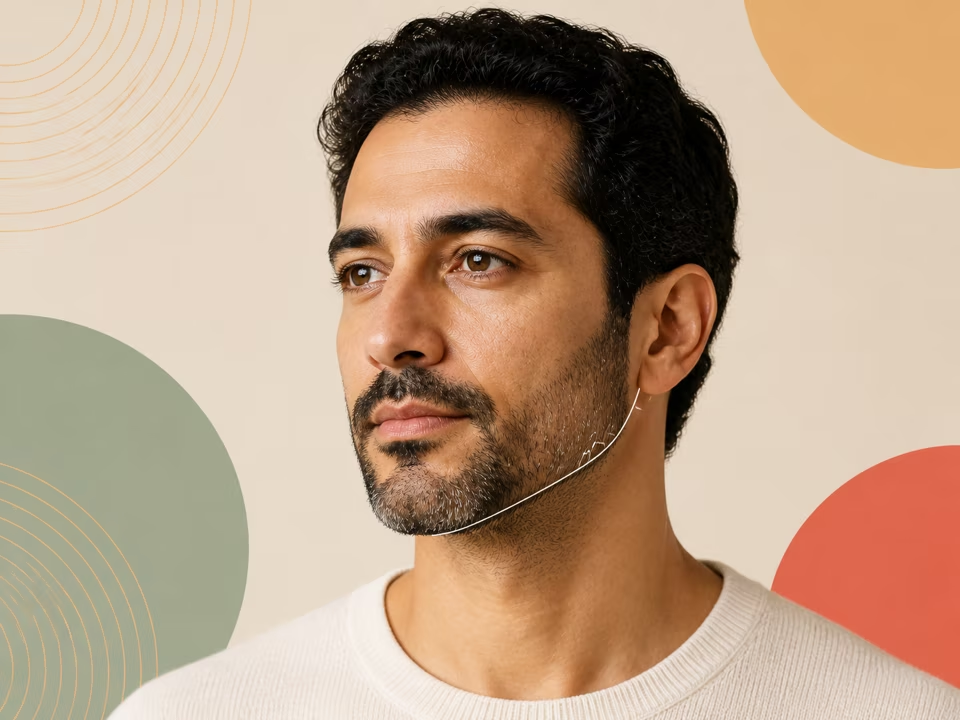
Free jawline test: upload a photo to measure visible jaw contour balance, side-to-side angle difference, jaw-to-cheek width and lower-third share.
Open tool →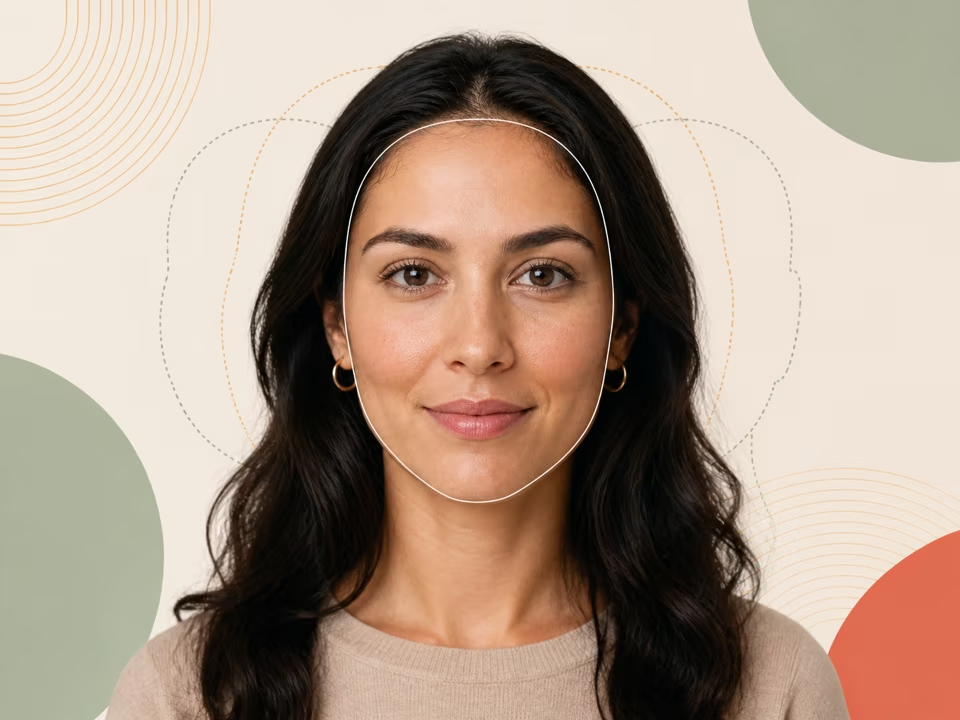
Free face shape detector: upload a photo to rank oval, round, square, oblong, heart, diamond and triangle against your visible contour widths and jaw angles.
Open tool →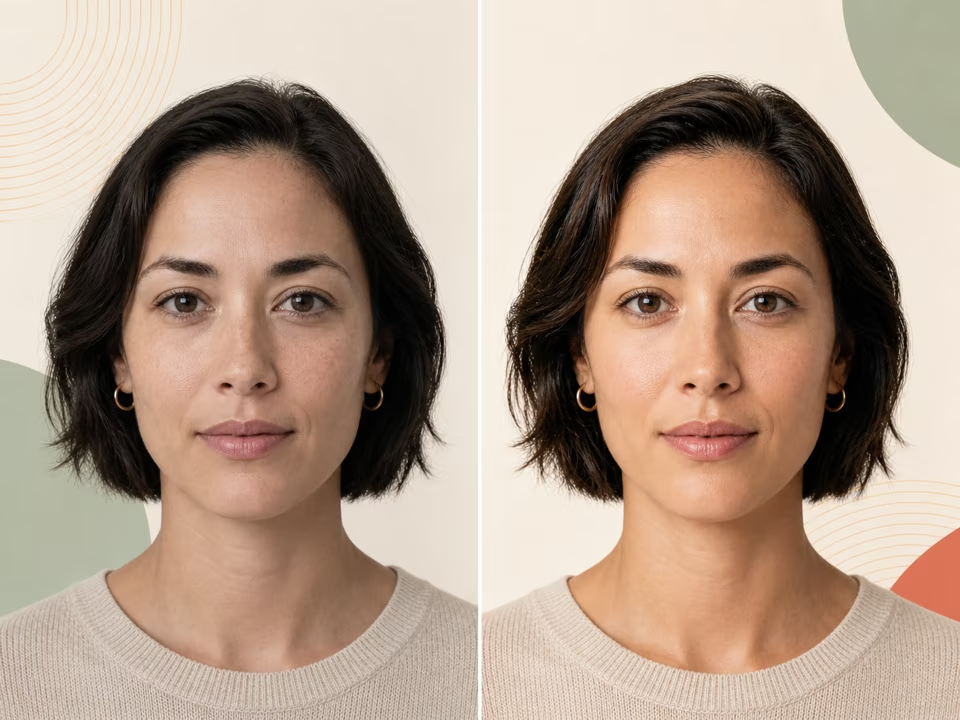
Upload two photos and see which one presents better, broken down by lighting, sharpness, head angle and framing.
Open tool →